
Composting Guide: How To Build Healthy Soil
Composting Guide: How To Build Healthy Soil
Keen to turn your garden and kitchen waste into black gold? Composting is one of the simplest and most rewarding ways to boost your soil health, reduce household waste, and create a thriving, sustainable garden. Whether you're new to composting or looking to improve your current setup, this guide walks you through how to build and maintain a compost system that thrives in the unique climate and soil conditions of the Waikato region.
Why Compost?
Composting improves soil structure, aeration, and drainage which often creates a great environment for your plants to flourish. Composting can help to retain moisture which is especially helpful during summer. Composting reduces your household waste by putting your organic waste to good use. It makes your soil a nutrient powerhouse that helps to feed your plants everything they need to thrive. Lastly, it creates the perfect habitat to foster microbial life which brings balance to your garden.
Waikato Composting Conditions:
The Waikato has a mild, temperate climate with warm summers and cooler wet winters. This means:
Compost breaks down faster in summer, especially if kept moist and turned.
In winter, composting slows down, so smaller particle sizes and regular turning help speed things up.
Clay-heavy soils, common in the region, really benefit from compost additions to improve drainage and texture.
What to Compost: The Greens & Browns
To get a balanced compost pile, aim for a good mix of:
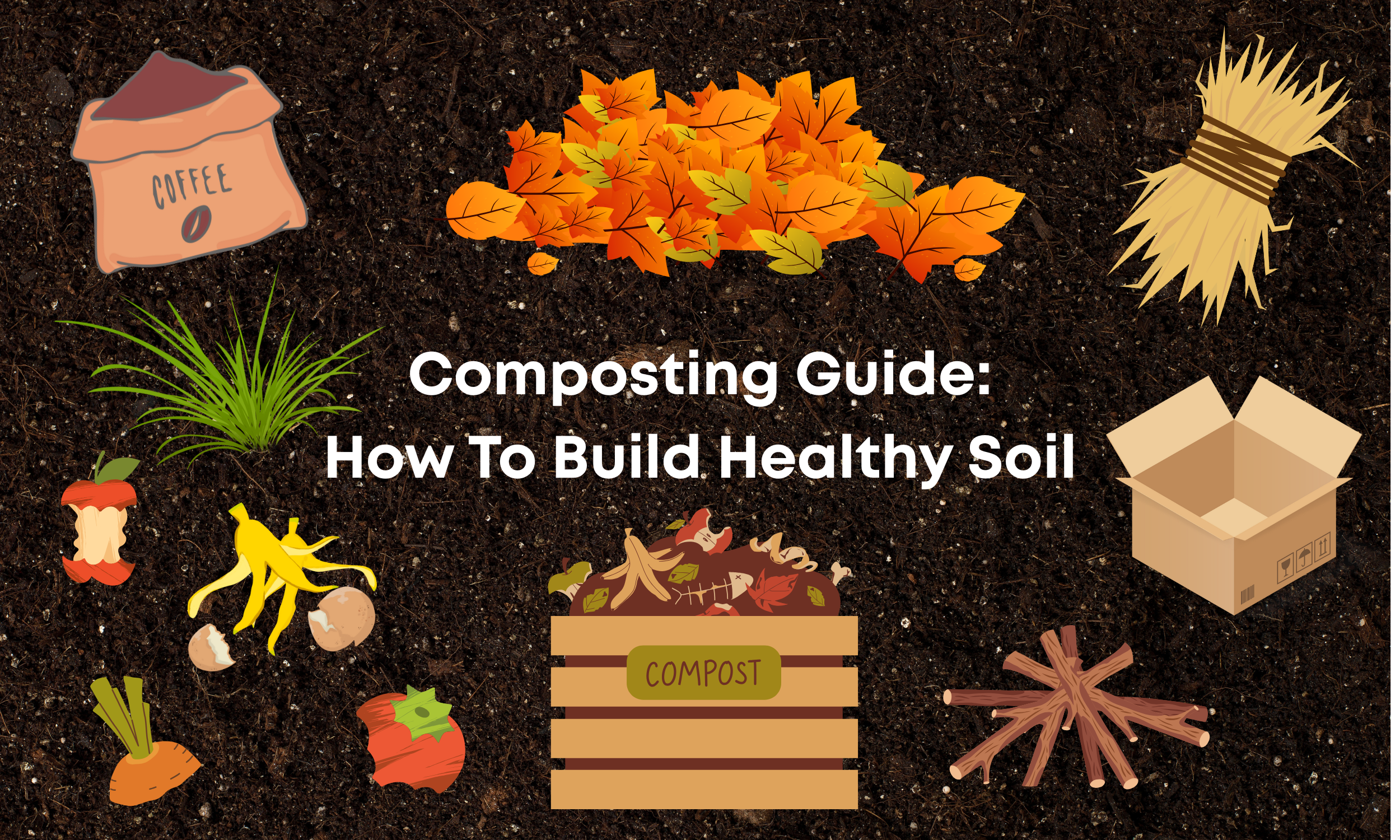
Greens (Nitrogen-rich): Veggie scraps, Fruit peels, Coffee grounds, Grass clippings and Plant trimmings.
Browns (Carbon-rich): Dry leaves, Straw or hay, Shredded newspaper, Cardboard (tear into small bits) and Sawdust (untreated only)
Tip: The Golden Ratio is round 2–3 parts brown to 1 part green. Too many greens = smelly and wet. Too many browns = slow decomposition.
Setting Up Your Compost System:
Step 1: Choose your spot! Pick a well-draining, partly shaded area with good air circulation. We recommend placing your compost heap straight onto bare soil, this will encourage worms and microbes to do their thing.
Step 2: Choose a system that suits your needs. Compost bin: Great for smaller gardens or suburban properties. Open heap: Works well on larger properties, just layer directly onto soil. Tumbler: Speeds things up with easy turning and good aeration. Or Three-bin system: Ideal for avid gardeners, one bin for active composting, one for curing, and one ready to use.
Step 3: Build your pile (layer by layer). Start with a coarse brown base: Sticks, twigs, dry leaves for drainage. Add greens: Veggie scraps, garden clippings. Cover with more browns: Shredded cardboard, leaves, straw. Add a sprinkle of soil or finished compost to introduce microbes. Moisten lightly: Your pile should be like a wrung-out sponge. Repeat in layers: As you add more material over time.
Maintaining Your Compost:
Add to it! We add to ours daily with food scraps, garden waste, cardboard etc.
Turn it! Every 1–2 weeks with a fork or compost aerator to add oxygen and mix materials.
Keep it moist! Not too dry, not too soggy. Water lightly if dry or cover during heavy rain.
Tip: Chop it up! Smaller pieces break down faster. Chop stalky garden waste and tear cardboard.
What not to Compost:
Meat, dairy, or oily food (attracts pests)
Dog & Cat poo
Diseased plants or weeds gone to seed
Glossy paper or synthetic materials
Plastic
Large chunks of wood (breaks down too slowly)
How to know if its Ready:
It smells earthy (not like your old food)
You can’t recognise the original materials - they have broken down
It’s soil-like, dark and crumbly
Tip: Depending on conditions, this can take 8-16 weeks for hot composting or 4-6 months for slower methods.
Wrap up:
Composting isn’t just about reducing waste, it’s about building your soil, nourishing your plants, and connecting more closely with your garden. Whether you’re on a lifestyle block or working with a small backyard veggie patch, your compost bin is one of the best tools you can have. Don’t worry if it’s not perfect. Stick with it, keep layering, turning, and tweaking, and soon you’ll be harvesting rich, homemade compost that’ll do wonders for your garden.